Mechanical and plant engineering today: Pressure points in production
Shafts, flanges, hydraulic and transmission components are rarely produced in large series in mechanical and plant engineering. Production is order-based, often as one-offs and small batches. On top of this comes price pressure from Asia: according to the VDMA, China accounted for 20% of machinery exports from the leading supplier countries in 2024, and Germany for 14%.
Many variants, small batches
Changeover time is incurred once per order, whether you produce one part or a hundred. With small batches, it is spread over just a few parts and often has a greater impact on the unit price than the cutting time. Small series become more economical when tools are prepared outside the machine and changed quickly.
A mix of materials on one machine
42CrMo4, hardened case-hardening steels, grey and ductile cast iron and stainless steels all run on the same machine. Even within a single material, machinability changes with the cross-section: quenched and tempered 42CrMo4 reaches a tensile strength of 1,100 to 1,300 N/mm² at diameters below 16 mm. At 160 to 250 mm, this drops to around 750 to 900 N/mm² due to lower through-hardenability. Cutting material, geometry and cutting data therefore also have to match the cross-section.
Large components, difficult clamping situations
Long shafts, heavy cast housings and forged blanks with uneven machining allowance introduce imbalance and interrupted cuts into the process. If the system of workpiece, clamping and tool is not stable enough, vibrations occur, often long before the spindle power has been fully utilised. The stability of the selected depth of cut also depends on the spindle speed.
Fits that last for years
Bearing seats, sealing surfaces and hydraulic bores determine how long a machine runs at the customer's site. Control bores in hydraulic valves have tolerances in the micrometre range, and running surfaces for shaft seals must be lead-free (free of twist). This has to be just as accurate for a single part as for the tenth repeat order.
Our mission: Innovation built on tradition. For over 50 years.
Process optimisation does not start with the product catalogue
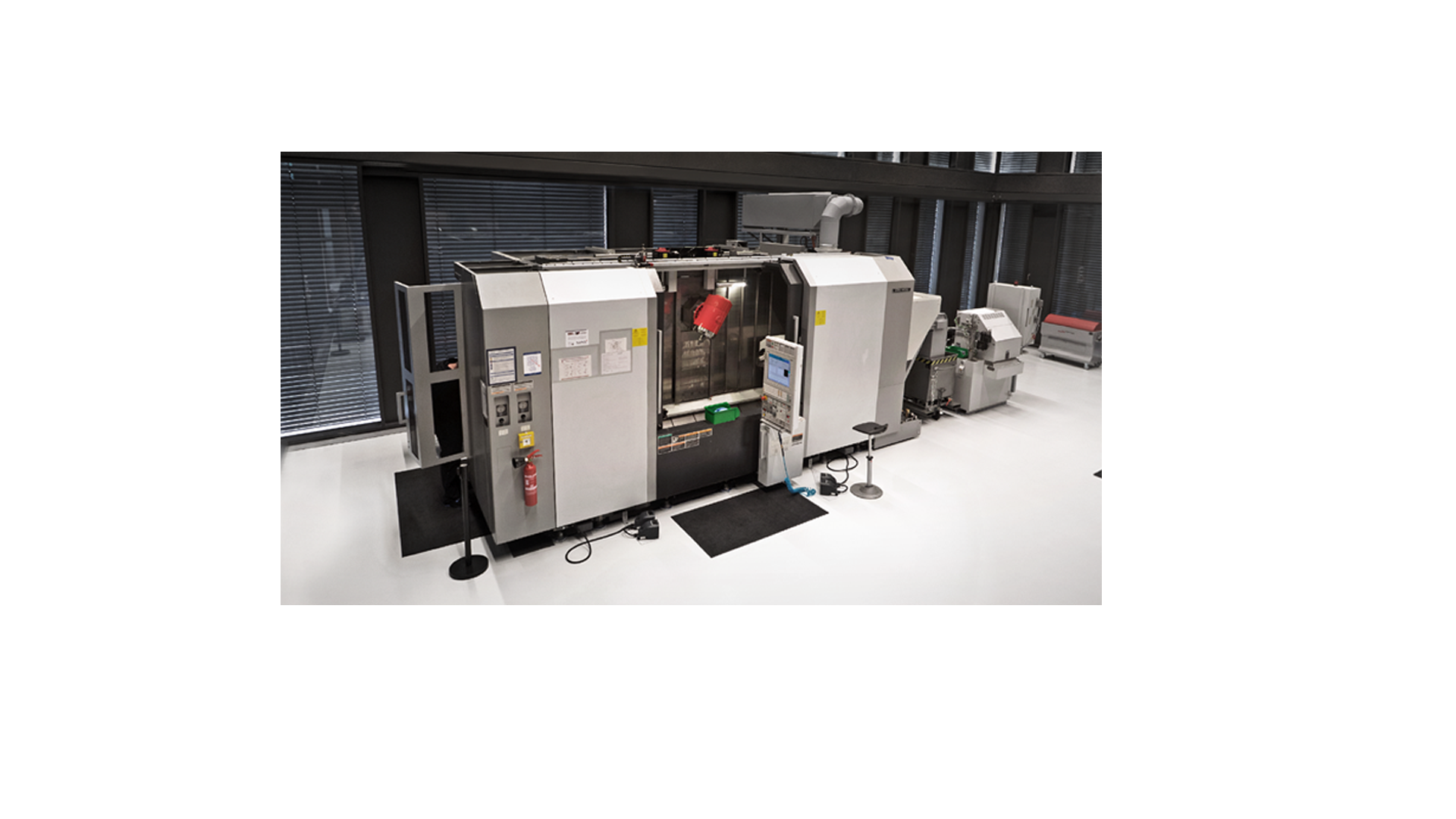
A new material or a tolerance that could previously only be achieved by grinding: in mechanical and plant engineering, almost every order is a special case. In the technical environment of the MAS Campus, we test tools and cutting parameters under real conditions before they go into your production.
Cutting materials for steel, cast iron and hardened components
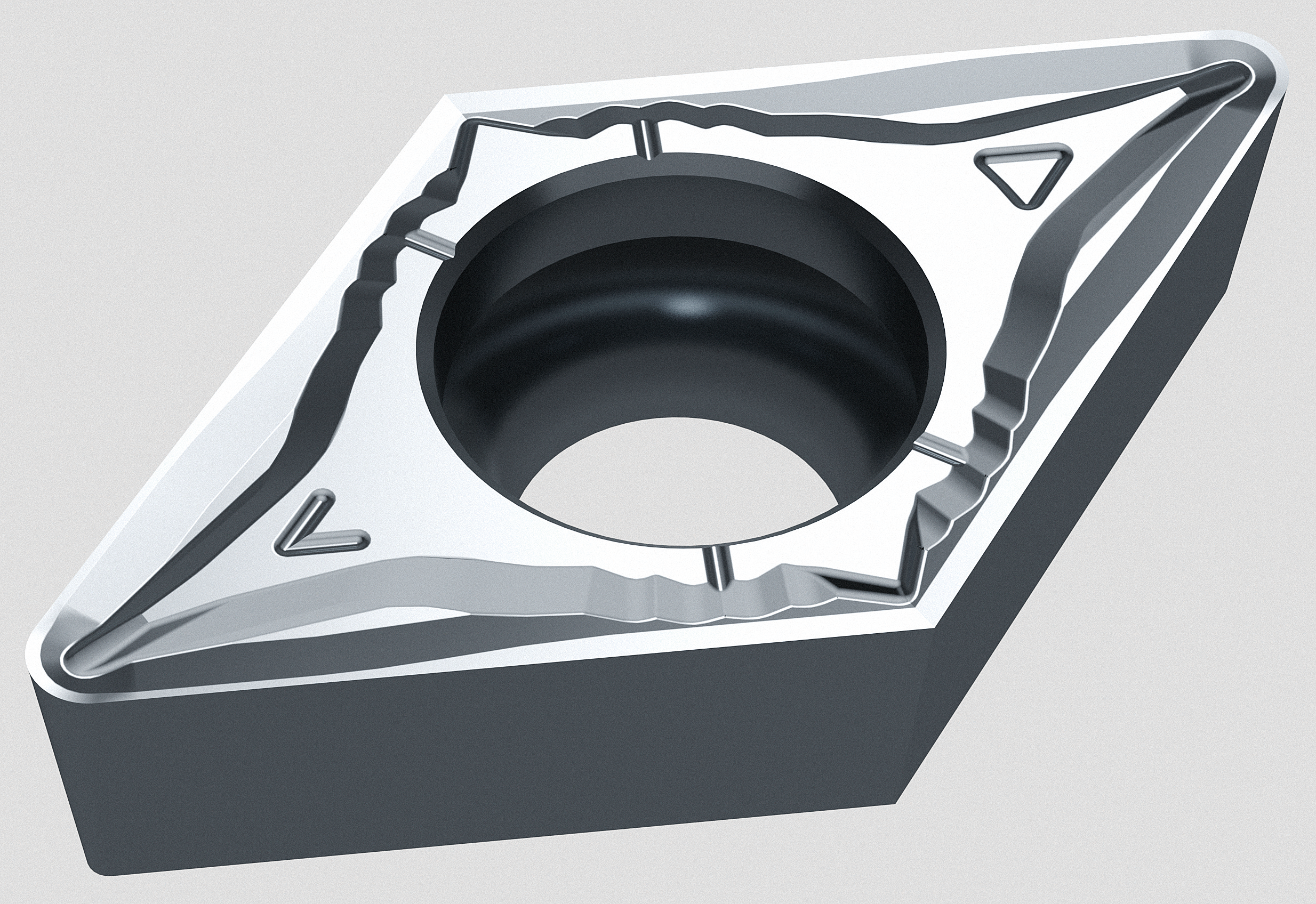
We match indexable inserts from the Sumitomo portfolio to the material, cut and quantity. Depending on the application, the grades used include:
- AC8115P for steel: 8 instead of 4 parts per cutting edge on a 42CrMo4 rotor shaft compared with a competitor grade
- HFT for high-feed hard turning of shafts, bearing rings and ring gears; with HFT-O, 90% shorter machining time compared with the previous process
- BNC8115 and BNS8125 for roughing and finishing grey cast iron, BNC8115 also for ductile cast iron and hardened steel
- BNC500 for ductile cast iron at high cutting speeds
We determine which grade is right on the component, not in the catalogue.
Changeover for small batches: when every order is new
With small batches, the time before the first good part determines the cost per part. This includes the tool change, but just as much running in and inspecting the first part. In a REFA case study , 153 of 361 recorded loss reports on one machine were attributable to changeover, which is 42.4%.
Bundling rarely works for single parts
Grouping orders with the same changeover requirements saves changeovers. However, single parts made to customer drawings can hardly be bundled anyway. The lever lies in making each individual changeover shorter.
Preset instead of adjust
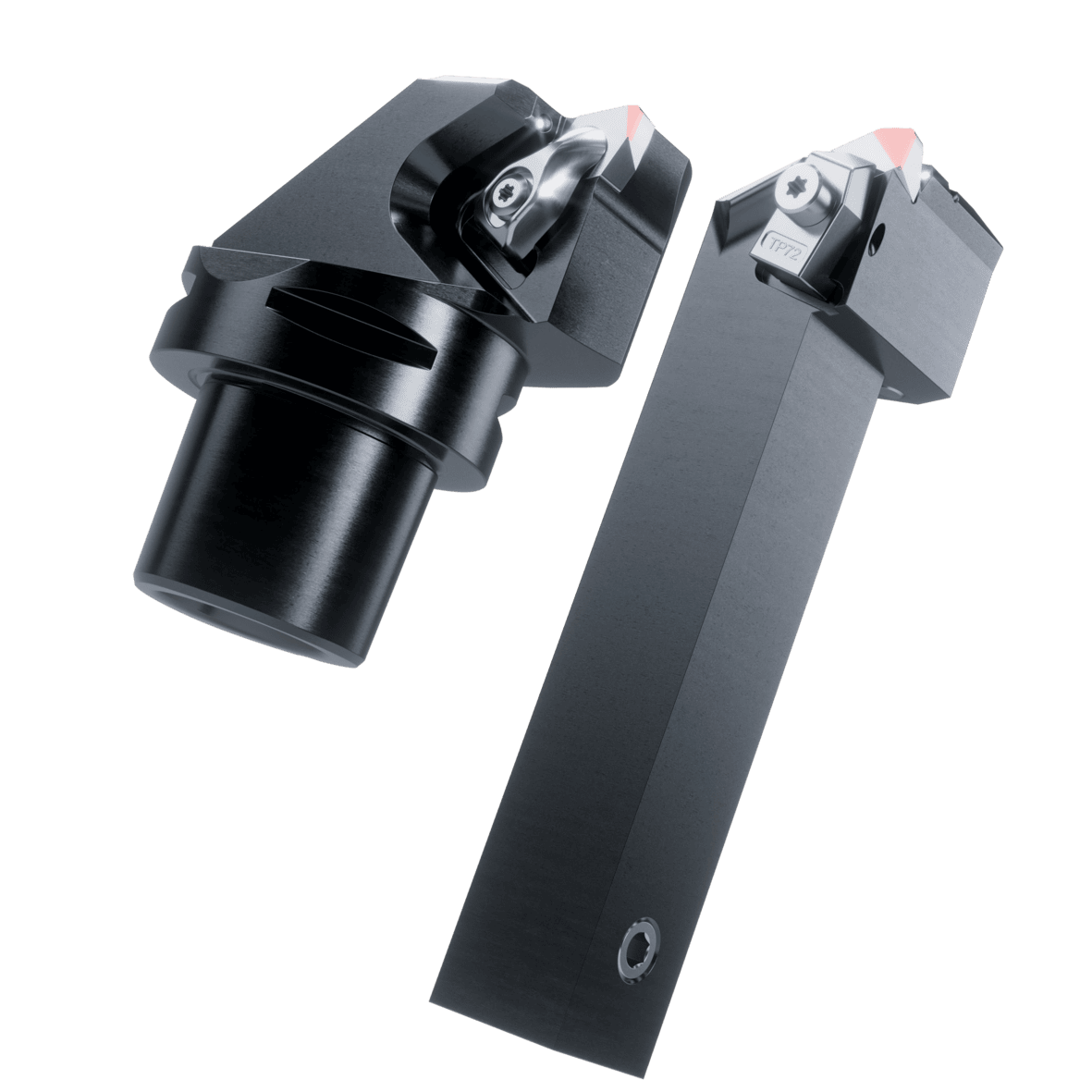
With the PZ©turn quick-change system, the base holder stays in the machine and only the preset tool head is changed. A single clamping screw releases and secures it, with a repeatability of 5 µm. Internal coolant is routed through the holder right up to the cutting edge.
Do externally what can be done externally
Presetting tools and preparing clamping devices belongs in the time while the machine is still producing the last part, not in downtime. With the SMED method, changeover times can typically be reduced by 60 to 70% in this way.
The first part has to be right
With a batch size of 1, there is no second part for readjustment. That is why you test new tools and cutting parameters with us beforehand in the demonstration centre at the MAS Campus, with your material and under real conditions.
More about changeover time optimisation
When the catalogue is not enough: Special tools and service
For contours and components that no standard tool can cover, we develop special tools ourselves. Our regrinding service restores blunt tools to their original dimensions. Since China made tungsten exports subject to licensing, the export price of the precursor APT rose by around 218% in 2025, according to Fastmarkets. Regrinding instead of buying new therefore pays off sooner.
✓ Special tools from our own development
✓ Form grooving inserts from MAS Carbide made to drawing
✓ Regrinding service for your tools
✓ TOOL©time for a clear overview of your tool store
Innovations for mechanical and plant engineering
VARIO©turn: Roughing and finishing with one tool
CBN high-feed tool for facing, diameters, radii and tapers.
- Up to 400% higher part output thanks to high-feed geometry
- Machining time reduced by 85%
- Roughing and finishing with the same tool
- Also in interrupted cuts
PZ©turn: Change the tool head instead of adjusting
Modular quick-change system for turning tools, square shank 10 to 20 mm.
- One clamping screw for the change
- Repeatability of 5 µm
- Internal coolant through the holder right up to the cutting edge
- Changeover time savings of 80% and more
MODUL©turn: Boring bars from a modular system
Modular boring bar system with internal coolant, for single-part and series production.
- For soft and hard machining
- Cylindrical shank, with VDI, PSK and HSK on request
- Standard and special solutions from one system
WHIRL©tool: Thread whirling without adjustment
Monoblock whirling tool with fixed insert seat.
- 90% less tool change time
- 50% more productive thanks to more cutting edges
- High concentricity thanks to monoblock design
- Targeted chip evacuation without chip nests
When every order is different, the process has to be right
Changeover minutes, scrap on the first part and rework often weigh more heavily here than the pure cutting time. At MAS, we coordinate tools and cutting parameters with you in advance so that the very first part of an order is right and the machine is quickly back to making chips.
Frequently asked questions
How much changeover time does a quick-change system save? With PZ©turn, changeover time savings of 80% and more are realistic, because only the preset tool head is changed and there is no need for readjustment. How much you save depends on how often you change over and how many tools are changed per order.
Is a quick-change system also worthwhile for batch sizes of 1 to 10? Especially there. The smaller the batch, the greater the share of changeover time in the cost per part.
When does hard turning replace grinding? Hard turning achieves IT5 to IT6 tolerance grades and roughness depths below 5 µm. For long shaft sections and large surfaces, grinding often remains the better choice.
Can I hard turn running surfaces for shaft seals? Yes. Conventional turning leaves a lead (twist) structure that can pump oil, which is why these surfaces are usually ground. With our special lead-free tools, they can be hard turned, even on demanding shafts.
Can I test tools before switching over? Yes. In the demonstration centre at the MAS Campus, we test tools and cutting parameters under real conditions.