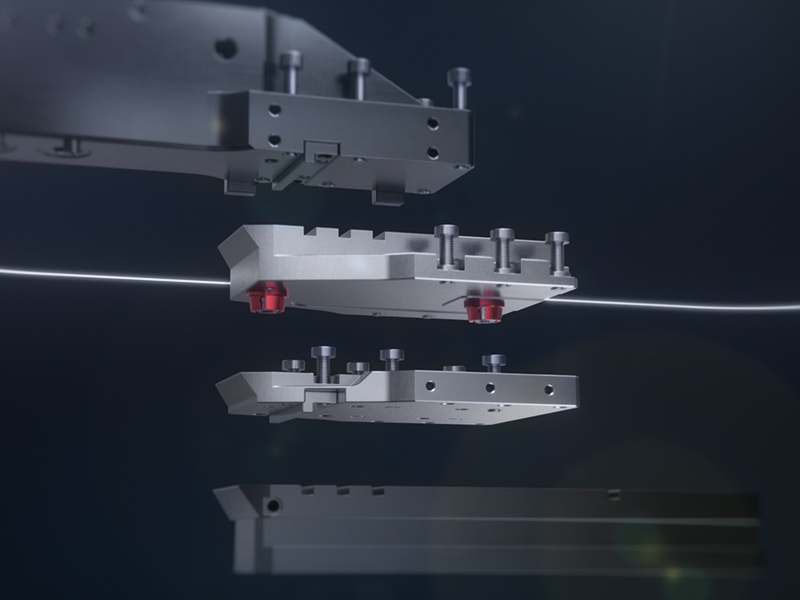
Rüstzeitoptimierung Header
Loading...

Changeover Time Optimization in Machining

In many manufacturing companies, changeover time optimization still receives too little attention – unjustifiably so. Even an initial analysis often reveals double-digit potential for efficiency improvements.

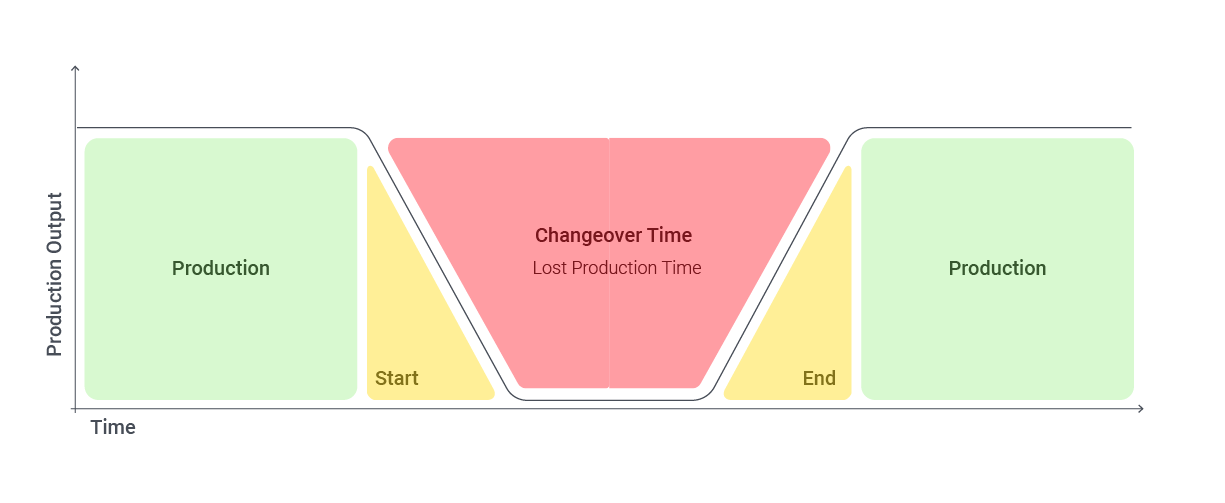
Changeover time refers to the period during which a machine is converted from one production order to the next.

Although this phase is necessary, it represents machine downtime and therefore generates no added value to the workpiece. In manufacturing engineering, minimizing changeover times is therefore a key factor in increasing productivity and cost efficiency, especially when producing small batch sizes. Changeover time = machine downtime = no value added.

Reducing changeover time therefore means shortening non-productive periods and increasing overall productivity. Or, as it is commonly stated in practice: changeover itself does not create product value – “when you are not running a machine, you are not making money.”


Rüstzeit Ablauf: Produktion - Rüstbeginn - Rüstzeit - Rüstende - Produktion

Impact of Changeover Time Reduction on Productivity

Long changeover times have a direct negative impact on machine output. Every minute spent on changeover instead of cutting reduces effective machine availability and therefore throughput. Although changeover is not inherently considered waste, extended changeover times clearly reduce the productivity and efficiency of equipment.

Especially in times of smaller batch sizes and just-in-time manufacturing, excessive changeover times limit flexibility: frequent order changes are hardly worthwhile if each changeover consumes a significant amount of time. If changeover times are reduced by half, twice as many product changeovers become possible – enabling companies to produce smaller batches without sacrificing efficiency. In addition, shorter changeover times improve OEE (Overall Equipment Effectiveness) through higher equipment utilization and fewer unplanned downtimes.

In short: every minute of changeover time saved increases cutting time and therefore profit.

MAS Produktion Rüstzeiten Alexander Buss
Loading...

SMED Method – Fast Changeovers for Machines

To reduce changeover times, both organizational and technical approaches are applied. A proven holistic approach is the SMED method (Single Minute Exchange of Die). SMED, developed by Shigeo Shingo in Japan, aims to optimize changeover processes so that they can be completed in the shortest possible time.

The core principle: separate internal from external changeover activities – and shift as many steps as possible to external time.

The SMED-based approach to changeover time optimization therefore consists of converting as many internal changeover steps as possible into external ones, while simplifying and accelerating the remaining internal activities.

In practice, SMED is often used as a starting point and complemented by Lean methods or Total Productive Maintenance (TPM) to achieve additional efficiency gains.

Internal Changeover Activities

All tasks that can only be performed while the machine is stopped (e.g. clamping a new workpiece).

External Changeover Activities

Tasks that can be carried out in advance while the machine is still running (e.g. presetting tools).

By applying the SMED method, changeover times can typically be reduced by 60 to 70 %.

Example: How SMED Gradually Reduces Changeover Time

To illustrate the practical application of SMED, let us consider a hypothetical case study.

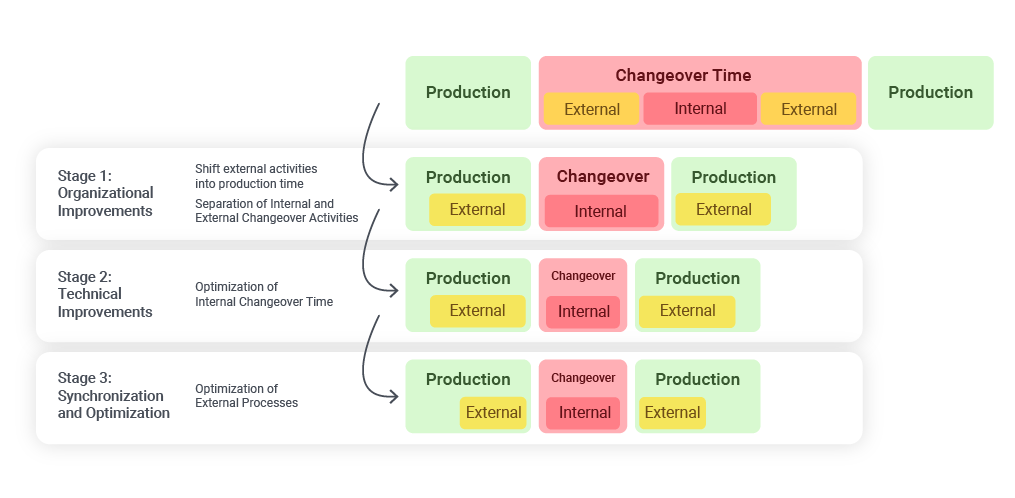
A machining company produces components in frequently changing small batch sizes on a CNC milling machine. The changeover time per order is approximately 90 minutes – during this period, the machine is completely idle..


SMED Stufen Optimierungsablauf

Example: How SMED Gradually Reduces Changeover Time

Initial State

  • There is no distinction between internal and external changeover activities.
  • All steps are carried out in an unstructured manner: the machine is completely stopped while both preparatory and machine-bound tasks are performed. These include, for example, tool selection, searching for clamping equipment, mounting fixtures, and setting reference points.

SMED Stage 1: Organizational Improvements

The first measure is the separation of internal and external changeover activities.

  • External tasks (e.g. preparing tools and clamping equipment, using presetting devices) are carried out while the machine is still producing the last part of the previous batch (Product A).
  • The internal changeover time (red) remains unchanged, but the overall changeover process starts earlier, running in parallel with the ongoing production process.

Result: Actual machine downtime is reduced to approximately 70 minutes, as preparatory tasks are shifted forward.

SMED Stage 2: Technical Improvements

The focus now shifts to optimizing internal changeover time, primarily through technical improvements.

  • Introduction of a zero-point clamping system for fixtures: fixtures can now be located and locked into position within seconds – without manual alignment.
  • In addition, a quick-change tooling system is implemented, enabling tool changes with a single manual action.
  • Standard tools remain in the machine; only specialized tools need to be changed.

Result: Internal changeover time is reduced to 30 minutes. The machine is therefore idle for only half as long as before.

SMED Stage 3: Synchronization and Optimization of External Changeover Activities

At this stage, the company also optimizes the external changeover processes.

  • Tool presetting and fixture assembly are carried out at an early stage and are perfectly synchronized with the production sequence.
  • Two employees work as a team: one performs the changeover at the machine, while the other prepares the tools externally in parallel.

Result:

  • Internal changeover time remains at 30 minutes, but no idle time occurs between Product A and Product B.
  • The transition from Product A to Product B takes place seamlessly, without any downtime in the process.

Overall savings:
By applying the SMED approach, the original changeover time was reduced from 90 minutes to approximately 30 minutes – without costly automation, purely through systematic optimization.


6 Schritte von SMED
Loading...

Implementing the SMED Method in 6 Steps: How It Works

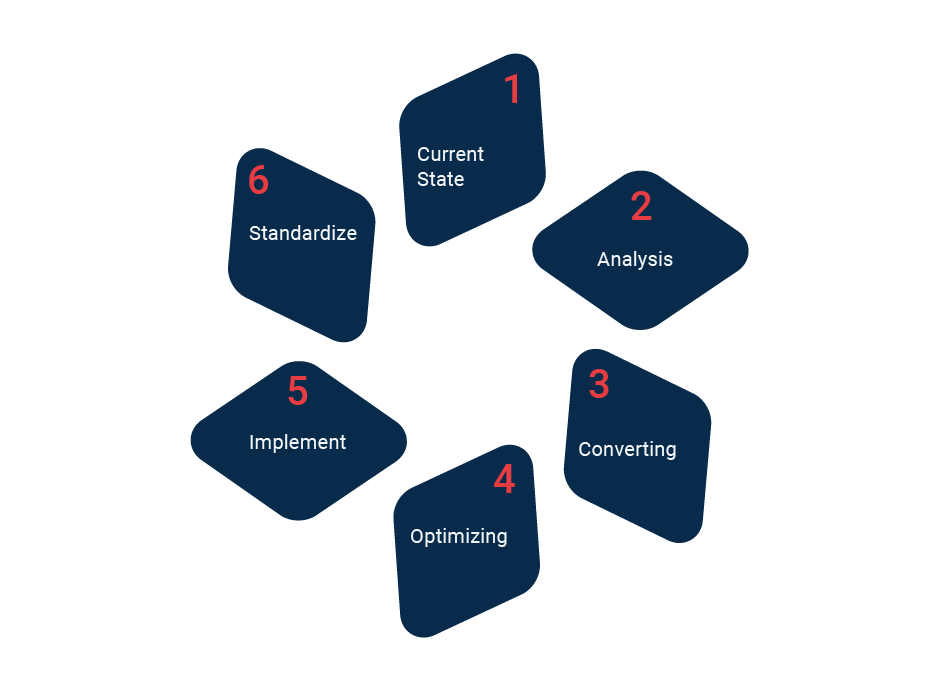
The SMED approach makes sense in theory – but how do you put it into practice? To make your production noticeably faster, you proceed step by step. The following guide shows how to decouple internal and external changeover times in six phases and sustainably accelerate your changeover processes.


1. Capture the Current State

In the first step, the existing changeover process is analyzed in detail. The goal is to document the entire changeover sequence without gaps. This is often done using:

  • time studies
  • video analyses
  • direct process observation at the workstation

All changeover activities are recorded – from removing the previous tools to installing the new ones – including times and movements. It is also important to document auxiliary times and waiting times.

Objective: create transparency and establish a clear baseline for improvements.


2. Analysis of Individual Steps

In this phase, the documented changeover steps are systematically analyzed. All activities are classified as internal or external:

  • Internal: can only be performed while the machine is stopped (e.g. clamping operations at the machine).
  • External: can be carried out in parallel while the machine is running (e.g. tool presetting).

In addition, the following aspects are evaluated:

  • Which activities add no value to the process?
  • Which types of waste occur (e.g. searching for tools)?
  • Are there deficits in standardization or training?

Objective: identify weaknesses and optimization potential.

3. Converting Internal Changeover Activities into External Ones

This is where the core SMED measure begins: all internal changeover activities are examined to determine whether they can be converted into external activities.

Examples:

  • Can tools and clamping equipment be prepared in advance while the machine is still producing the previous part?
  • Can fixtures be pre-assembled outside the machine?

Objective: drastically reduce machine downtime by decoupling and shifting activities upstream.

4. Optimizing Internal and External Changeover Steps

After shifting activities, both areas are actively optimized:

  • Internal: quick-clamping systems, modular fixtures, reduction of unnecessary manual actions.
  • External: ergonomic and well-structured workplace design (e.g. shadow boards), short travel distances, clear responsibilities.

At this stage, technical improvements (e.g. presetting devices) can be combined with organizational standards (e.g. checklists, 5S).

Objective: accelerate all processes and minimize sources of error.

5. Define, Implement, and Refine the Target Process

In this stage, an optimized target process is developed and tested in practice. The new workflows are introduced at the machine and evaluated under real operating conditions.

Important: feedback and correction loops are planned – any issues or unforeseen obstacles that arise are captured and the processes are adjusted accordingly.

Objective: develop a practical solution and fine-tune it.

6. Standardization

Finally, the new workflows are formalized into standards:

  • creation of work instructions and checklists
  • training of employees in the new changeover process
  • ensuring compliance with the new procedures through audits or internal controls

Objective: ensure sustainability and prevent old (inefficient) routines from re-emerging.

Practical Examples of Changeover Time Optimization

Theory becomes more tangible when successful changeover time optimizations are illustrated with real-world examples. Below are three typical scenarios from machining operations:


Example 1 – Simplifying Tool Changes

A contract manufacturer producing frequently changing small batch sizes previously spent a significant amount of time removing all cutting tools from their holders and replacing them for each new order. In some cases, this changeover procedure took longer than the actual machining of a small number of parts. After analysis, it became clear that many orders could be processed using a common set of tools. As a result, the machine’s turret was equipped with a standardized tool set (drilling, milling, turning) that covered most requirements. New NC programs were written to use only these standard tools.

Result: During product changeovers, most tools remained in the machine; only special tools needed to be exchanged. Changeover time was drastically reduced, as time-consuming tool changes and adjustments were eliminated. The machine returned to production much faster and smaller batch sizes could be produced economically.

Example 2 – Zero-Point Clamping System in Milling Operations

In a mechanical engineering company, every change of workholding fixtures previously required complete realignment. Precisely probing with a dial indicator and setting reference points often took one to two hours per changeover – time during which the milling machine produced no parts. By introducing a zero-point clamping system (standardized clamping modules on the table and matching clamping studs on each fixture), implemented using the modular quick-change systems PZ©turn and XCHANGE©plate, this step was virtually eliminated.

Fixtures now locate and lock into the exact same position every time, secured by a simple clamping mechanism. Coordinates and references are immediately correct. As a result, changeover time was reduced from “hours” to just a few minutes, as the removal, installation, and adjustment of numerous components inside the working area were no longer required. The machine hardly has to wait for a new order – clamp, lock in, press start. This principle, standard in milling operations, is now also increasingly applied to turning machines, for example through quick-change plate systems.

Example 3 – Quick-Change System on a Turning Machine

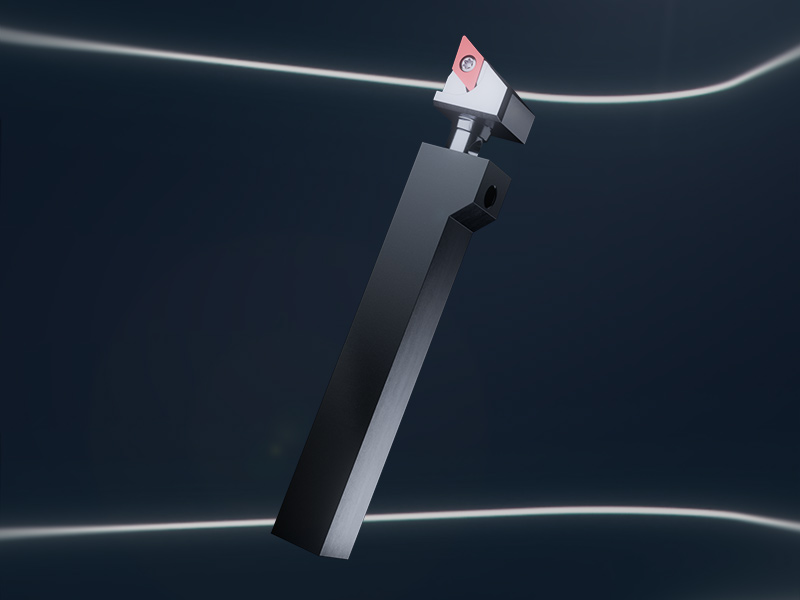
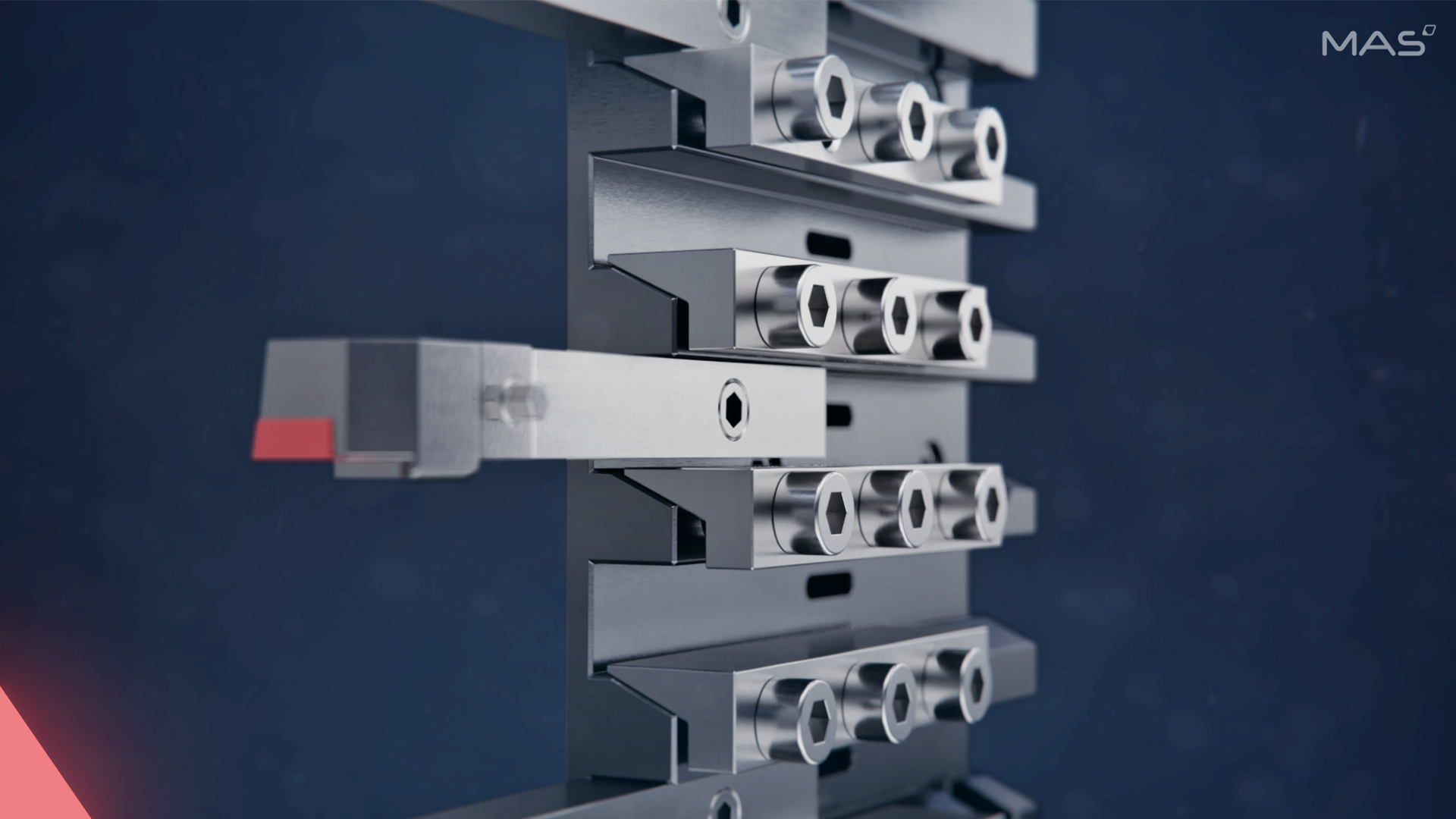
Changeover times can also be significantly reduced in CNC turning. Conventionally, a turning toolholder must be completely removed and replaced, the cutting edge reset to center height, and tool data updated – a process that can take several minutes per tool. Modern modular quick-change systems allow only the front tool head to be removed and replaced with another, pre-set head. A single clamping screw releases and secures the interchangeable head within seconds. Thanks to high repeatability, the new tool head is positioned exactly like its predecessor, eliminating the need for further adjustment.

As a result, all tools required for a new order can be prepared within minutes on a turret lathe or sliding-head lathe – turning changeovers into a minor task.


These examples clearly show that, whether through organizational measures or innovative technology, changeover time optimization in machining is practically achievable and delivers tangible benefits. The key is to identify the most effective levers for each specific process.

Quick-Change Systems for Machining: PZ©turn and XCHANGE©plate


One of the most efficient technical methods for minimizing changeover times in machining is the use of dedicated quick-change tooling systems. Two examples are our innovations PZ©turn and XCHANGE©plate – modular quick-change systems that can reduce changeover times by a multiple.

PZturn
Loading...

PZ©turn – Modular Quick-Change System for Turning Tools

PZ©turn is a modular quick-change tooling system for turning machines, particularly for sliding-head lathes and multi-spindle machines. It was developed to make tool changes as simple and fast as possible without compromising precision. The system consists of a base holder (which remains in the machine) and interchangeable tool heads. With just a single clamping screw, the tool head can be released and replaced – the changeover takes only a few seconds. Despite this simplicity, PZ©turn achieves impressive repeatability in the micron range during tool changes. This means the new tool head is positioned just as accurately as the previous one, making readjustment virtually unnecessary.

In summary, PZ©turn allows turning tools to be preset externally and changed with minimal machine interruption. In practice, changeover time savings of 80% or more are realistic, as, for example, five tool changes that previously took several minutes each can now be completed within seconds.

XCHANGEplate
Loading...

XCHANGE©plate – Quick-Change Plate System for Multi-Spindle Machines

XCHANGE©plate is designed to simplify the changeover of driven tools and multi-tool holders, particularly in multi-spindle machines and sliding-head lathes. The system functions as an interchangeable tool plate designed as a zero-point clamping system. Various tool modules – such as turning or drilling tools for a multi-spindle lathe – are aligned and set up once on the machine. The plate can then be completely removed together with the tool module and reinserted without requiring realignment.

For machine operators, this means that instead of aligning each individual tool within the confined working area of the machine, the entire quick-change holder is simply inserted as a single unit into the designated interface. Additional setup work is eliminated, and the exchange plate locks into position with high repeatability. As a result, even less experienced operators can retool the machine in a very short time.

In practice, XCHANGE©plate significantly reduces the effort and time required for setup and changeover on multi-spindle machines and sliding-head lathes. Especially in applications with frequently changing very small batch sizes on complex turning machines, such a system enables substantial time savings.
MAS Campus Meeting Verena Geier Heiko Armbrecht
Loading...

Individual Consulting and Optimization

No two manufacturing environments are exactly alike – which is why we take an individual consulting approach to process optimization. For more than 40 years, MAS has been developing customized solutions for machining together with its customers.